How CAPI Survey Software Captures Hard-to-Reach Demographics
Computer-Assisted Personal Interviewing (CAPI) connects with rural or less tech-savvy populations that digital methods frequently overlook. CAPI enables interviewers to build rapport and observe non-verbal cues that enhance data interpretation and context.
“Fieldwork experience shows that participants in secluded areas approach research participation more conservatively. Face-to-face methodology using mobile survey software consistently delivers superior response rates in these regions, providing insights that would otherwise remain inaccessible.”
The offline capability of modern CAPI software has been a game-changer for many research firms operating in Latin America. These tools enable researchers to collect data in previously inaccessible regions without internet connectivity and synchronize information once connections are restored.
Enhancing Survey Quality Control Through Multi-Modal Methods
Each methodology contributes unique strengths to your quality control process: CATI (Computer-Assisted Telephone Interviewing) enables real-time clarification of complex questions, while CAWI (Computer-Assisted Web Interviewing) reduces social desirability bias for sensitive topics. Combining methodologies creates a system of checks and balances that elevates data integrity without excessive investment in any single quality mechanism.
For research firms operating in multiple regions, integrating quality control across methodologies transforms fieldwork efficiency. Features like GPS tracking, silent recordings, and predictive quality controls allow suspicious interviews to be automatically flagged regardless of collection method—giving both researchers and clients greater confidence in the data.
Mobile Survey Software: Ensuring Data Consistency Across Methods
One of the greatest challenges in multi-modal research lies in maintaining data consistency—a pain point frequently expressed by research professionals. How do you ensure data collected through a face-to-face interview is comparable to web survey responses?
“Advanced survey platforms address this challenge by offering a single unified platform for all methodologies. This ensures question logic, skip patterns, and response options remain uniform regardless of whether you’re deploying CAPI, CATI, or CAWI surveys.”
Market research agencies report significant benefits when using a unified platform. By consolidating multiple survey methodologies into one system, they eliminate the fragmentation that previously caused inconsistencies in their data collection processes.
Research professionals often ask: What are the common pitfalls when mixing different survey methodologies?
Inconsistent question presentation across channels
Varied response scales that complicate analysis
Differing respondent demographics that skew results
The best solutions address these challenges through synchronized questionnaire design that automatically adapts to each methodology without altering the underlying data structure.
Overcoming Regional Challenges with Flexible Survey Solutions
In emerging markets where internet penetration varies and cultural factors influence response behaviors, the ability to pivot between methodologies becomes essential for research success.
An international tracking study across eight markets demonstrates this approach in practice:
- Urban centers with high connectivity benefited from CAWI’s efficient digital-first approach
- Suburban areas required CATI to engage middle-aged respondents not responding to digital outreach
- Rural regions needed CAPI interviews to capture perspectives from demographics with limited technology access
This adaptable strategy delivered comprehensive insights without sacrificing methodological rigor or exceeding budget constraints.
“Research firms in North Africa have leveraged this flexibility to expand operations across multiple countries. The ability to collect data offline and then sync it once connectivity is restored proves essential for operations in remote regions where consistent internet access cannot be guaranteed.”
Research professionals often ask:
How can I monitor quality across different data collection methods?
SurveyToGo provides real-time monitoring tools that function identically across face-to-face, telephone, and web methodologies. The same quality checks, GPS validation, and silent recording capabilities work regardless of collection method, creating a standardized quality protocol across all approaches.
How do I maintain data consistency across different collection methods?
By unifying all methodologies within a single platform, SurveyToGo eliminates the format inconsistencies and logic variations that typically occur when using other tools for various methods. The system ensures that CAPI, CATI, and CAWI surveys all follow identical logic, apply the same validations, and produce consistently formatted data ready for analysis.

Real-Time Quality Monitoring Across Survey Collection Methods
Quality control becomes increasingly complex when managing multiple survey methodologies simultaneously. How can researchers effectively monitor quality across different data collection methods without multiplying their workload?
Integrated quality control dashboards solve this problem by providing unified oversight across all channels. Modern platforms feature GPS location tracking for CAPI surveys, silent recordings for quality verification, and predictive quality controls that work seamlessly across methodologies.
“This transparency transforms client relationships for many research agencies. When clients can see where data is collected and verify its accuracy, trust increases substantially.”
Organizations using comprehensive multi-modal platforms report significant improvements in efficiency. Many have reduced survey turnaround times by 25% or more after adopting integrated systems. The pay-per-survey pricing model offered by some platforms proves particularly cost-effective compared to maintaining multiple systems with annual licensing fees.
The SurveyToGo Approach: Transforming Field Research with Multi-Modal Tools
When evaluating multi-modal solutions, strategic implementation matters. Successful execution requires harmonized questionnaires that maintain consistency across modalities while optimizing for each format’s strengths. This calibration might involve simplifying scales for telephone interviews or enhancing visual elements for web surveys while preserving data integrity.
Equally important is accounting for the different response patterns each methodology produces. Analysis must address these variations through appropriate statistical adjustments or careful segmentation. Effective multi-modal approaches use integrated platforms that combine data from multiple sources while maintaining rigorous survey quality control standards.
At SurveyToGo, we understand that selecting the right research approach involves weighing methodology against implementation expertise. Our experience with multi-modal approaches across global markets transforms data collection from a challenge into your competitive advantage.
SurveyToGo helps you apply the right technology at the right time for optimal research outcomes. Through proactive communication and collaboration, we adapt to your specific needs while respecting timeline and budget constraints.
Related Industries
Recommended for you

TI accelerates the shift toward autonomous vehicles with expanded automotive portfolio
New analog and embedded processing technologies from TI enable automakers to deliver smarter, safer and more connected driving experiences across their entire vehicle fleet

Monitor Tableau Cloud Deployments of Any Size with the Platform Data API
Tableau puts self-service visual analytics within reach of everyone, from small businesses with just a few licenses to massive enterprises deploying it across their entire

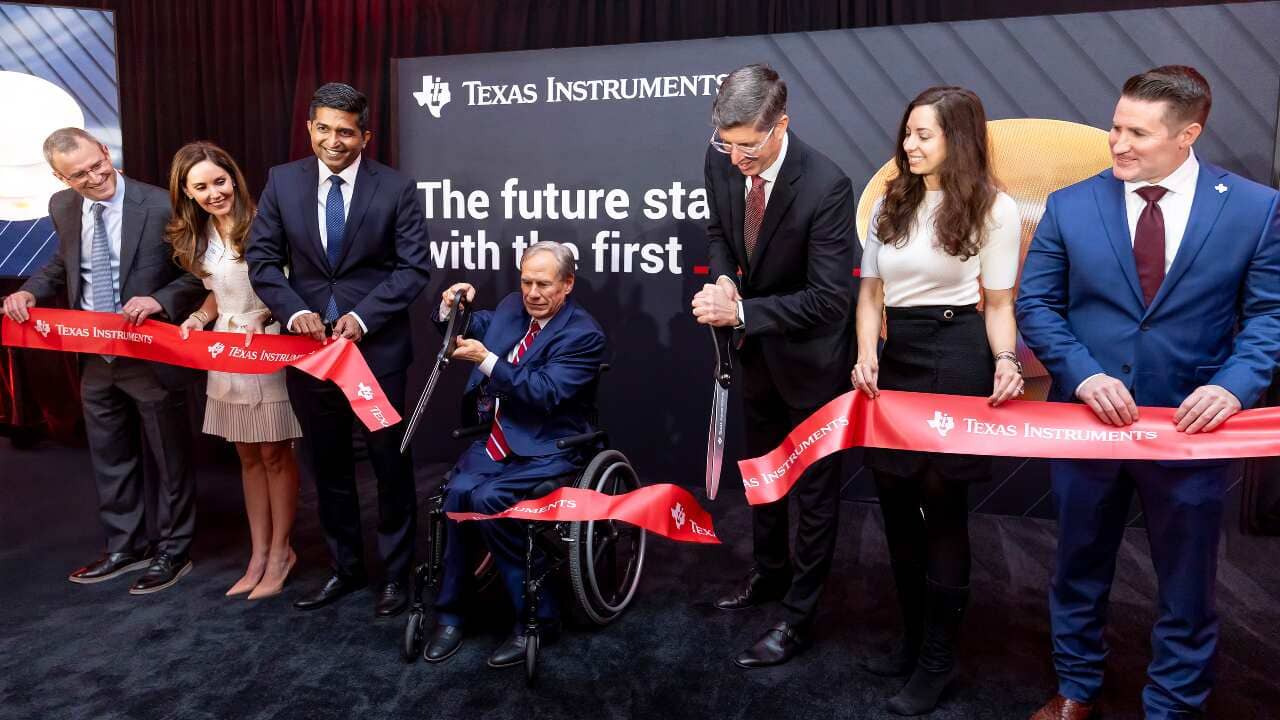
Texas Instruments begins production at its newest 300mm semiconductor manufacturing facility in Sherman, Texas
State-of-the-art wafer fab will produce tens of millions of chips daily that go into nearly every electronic device